
Knowing how your Out-of-Pocket Maximum (OOPM) works can help you make informed decisions about your healthcare and avoid unexpected expenses. We’re here to support you every step of the way.
What Is an Out-of-Pocket Maximum?
Your OOPM is the most you’ll have to pay for covered, in-network medical services in a benefit year. Once you hit that amount, your health plan may pay 100% of the costs for covered, in-network services for the rest of the year.
- Check your Summary Plan Description (SPD) on JoinHealth to find your OOPM amount and other plan details.
Your OOPM could include your spending on:
- In-Network care
- Covered Services
- Deductibles
- Copayments
- Coinsurance
However, it typically does not include:
- Monthly premiums
- Services not covered by your plan
- Out-of-Network care
Note: Out-of-pocket maximum amounts and coverage details vary by plan. Be sure to review your SPD to understand how it works for your coverage.
How Does It Work?
Here’s a breakdown of how your OOPM comes into play:
1. Deductible
This is the amount you pay for certain in-network, covered services before your plan begins to share the costs.
2. Cost-Sharing
After meeting your deductible, you may still pay part of the costs through:
- Copayments – A fixed amount, like $25 for a doctor’s visit. Some plans apply copays before the deductible is met.
- Coinsurance – A percentage of the cost, such as 20% of an in-network lab test or medical procedure.
3. Reaching the Maximum
Once your total spending on in-network, covered services reaches your plan’s out-of-pocket maximum, your plan may pay 100% of covered medical expenses for the rest of the benefit year.
Why is it Important?
Let’s look at an example scenario to show how an out-of-pocket maximum could help limit what you spend on healthcare in a year.
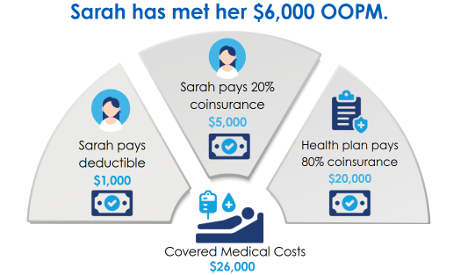
Sarah has a health plan with a $1,000 deductible and a $6,000 out-of-pocket maximum. During the year, she needs covered medical care which costs $26,000.
Here’s how her costs break down:
- She first pays her $1,000 deductible.
- After that, her health plan shares the cost. Sarah pays 20% coinsurance, which amounts to $5,000.
- At this point, Sarah has paid a total of $6,000—her out-of-pocket maximum.
For the rest of the benefit year, her plan may cover 100% of in-network, covered services. That means she won’t have to pay additional out-of-pocket costs for things like doctor visits, lab work, or follow-up care, as long as they’re covered by her plan.
Where to Learn More
To better understand your Out-of-Pocket Maximum amount and coverage details:
- Review your Summary Plan Description (SPD) on JoinHealth.
- Contact our customer service team on JoinHealth or via the phone number on the back of your ID card.
Important Reminder
This article is for general educational purposes only and does not constitute medical, legal, financial, or benefits advice. Please consult your doctor if you have any questions related to your medical care or treatment. Actual benefits, coverage details, and out-of-pocket costs may vary by plan. Always refer to your Summary Plan Description (SPD) or contact your plan administrator for specific information about your coverage.